

THE LAYERED SLEEP HEALING PROGRAM
Addressing every root cause at once, for change that actually holds.
If your sleep is a struggle, and it's not for lack of trying, then I'm glad you're here.
You're probably not someone who ignores their sleep. If anything, you've likely read all kinds of articles and books on sleep. You may take your supplements faithfully, and you've been through more than a few, because each one seemed to work for a while and then just stopped. Maybe you've tried the meditation apps, built a careful wind-down routine. Maybe a prescription that made you feel worse, or one that helped but left you uneasy about what happens the day it stops working. There might even be a ring or a bracelet on your wrist, grading your night like a report card.
And still, sleep is unpredictable. For some of you, there's the dread before a trip or the sense that it only holds together under perfect conditions, the earplugs, the mask, the exact routine, and that one late evening can undo the whole thing.
It's frustrating. And honestly, it's lonely, because it seems to come so easily to everyone else. After a while, you start to wonder if something is just wrong with you.
So let me say this plainly: nothing is wrong with you. You've just been handed tools that treat your sleep as separate from everything else going on in your body, and it was never separate at all.
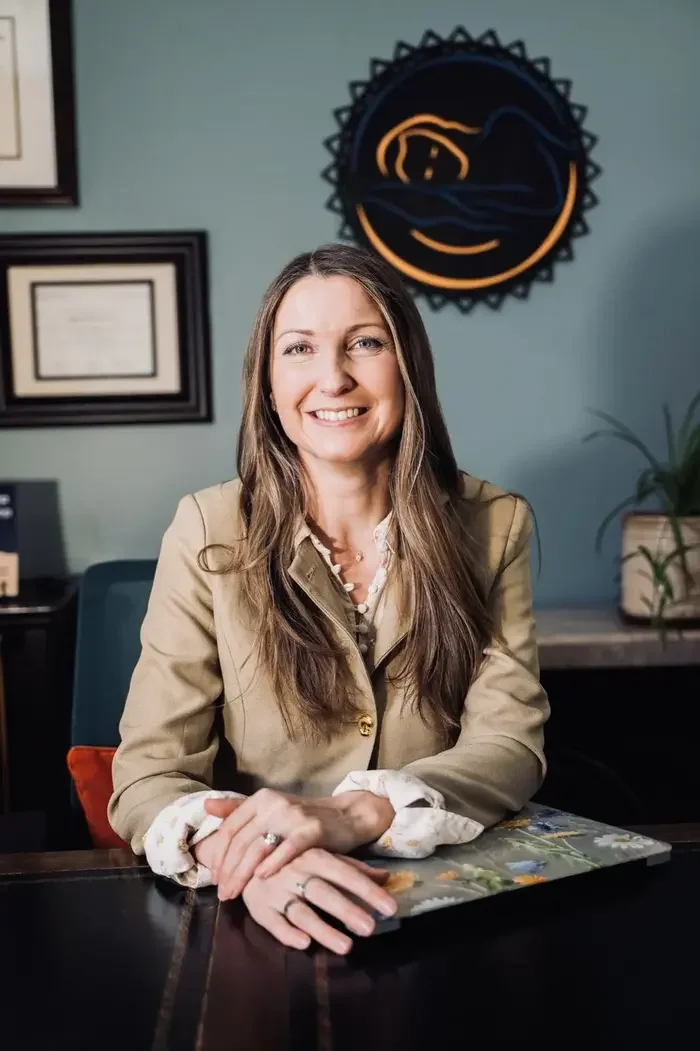
I've spent over 15 years watching this happen in my patients, and I know why it does
I'm Dr. Damiana Corca, a sleep and wellness specialist and the author of The Deep Blue Sleep. People come to me after they've tried everything, and what I keep seeing is that sleep is never only a nighttime problem. The answer is in a unique combination of root causes for each person, that may be found in hormones, digestion, breath, stress, and the stories we carry about our own bodies, all in conversation with one another.
I'll be honest with you: I've never had chronic insomnia (besides some occasional acute bouts). What I have had, and still tend to, is anxiety. So I know from the inside what it takes to notice an alarmed system, use the tools, and come back to steady ground, so that peace is actually possible.
I've been specializing in sleep since 2011, and my practice has evolved over the years by paying attention to what my patients actually needed. That's how the modalities in this program came together: alongside my acupuncture work, I added functional medicine, CBT-I and sleep hygiene tools, and breathwork.
Why different sleep strategies and tools work for a while, then stop
Chronic sleep trouble almost never has a single cause.
There is usually a vulnerability that was there all along: a system that runs a little wired, a light-sleeper temperament, a body that's sensitive to hormonal shifts. Then something tips you over, such as an illness, a loss, menopause, a stressful season, a new baby.
So here is what happens. That first stretch of bad sleep was your body doing its job. Staying alert through a hard time is protective, a survival response, beneficial even.
The real trouble starts when the hard time passes and sleep doesn't come back. By then the original trigger barely matters, because other things have taken over the task of keeping you awake. Things like anxiety around sleep, trying harder, the clock-watching, the early bedtimes or staying longer in bed, and the naps to catch up. And underneath it all, body systems still out of balance.
This is why something helps for a while and then stops. Each new supplement or technique reaches one layer while the others keep pulling underneath.
Let me give you an example: perhaps you already had mild sleep apnea without knowing it, and until something really stressful came along, those oxygen drops didn't make much difference. But add the stress, with the apnea still there, and your body starts learning new habits that don't serve you, and it all compounds. It keeps stopping and starting until every layer is addressed, and addressed at the same time.
There is no magic bullet, and I know by now you already know that. When we work the layers together instead of one at a time, your nervous system can be retrained, and sleep can come back and stay consistently good.

The 12-week Layered Sleep Healing Program
Let me introduce you to the program where we identify which root causes are yours, and bring it all together for your sleep healing.
1. Your body's sleep systems. We look at how stress hormones, blood sugar, digestion, thyroid, and sex hormones shape your nights, so you can recognize your own patterns and work well with your own healthcare team. At our first session you fill out an in-depth questionnaire, and then we go over it together and start unraveling what to ask your practitioners, what labs to consider, and where your particular issues may be coming from. (This is coaching and education. I don't diagnose or read your labs. I help you understand them.)
2. Your mind and sleep patterns. Using proven CBT-I strategies and your own sleep log, you unlearn what insomnia has taught you. We work week to week to put these strategies in place, based on what your log is showing us.
3. Your breath. We work on understanding your breath and how it can bring calm to your nervous system. You'll build a daily Buteyko breathwork practice that slowly resets your baseline, so calm becomes your normal state instead of a bedtime effort.
4. And all of it is guided live. Weekly coaching calls where the work gets personalized to you, plus two sessions a month focused on building and deepening your breath and mindfulness practice.

What the pre-recorded twelve-week modules look like
The lessons are yours to watch and rewatch at your own pace. Each one comes with a small practice or step for the week, so when we meet live, we can go straight to what's getting in your way. The weeks move through the layers in order, from the body outward to the mind and breath, and then to making it all your own.
Week 1 — Why everything worked for a while, then stopped. We start with the whole picture, because it changes everything to finally see it. You'll learn the three forces behind chronic sleep trouble in plain language, and begin to map your own.
Your body (weeks 2 to 4)
Week 2 — The wired-but-tired night. Stress hormones and the cortisol rhythm behind the 3am wake-up, and the part blood sugar plays in waking through the night. Together we look at whether sleep apnea might be part of your picture, and you begin your sleep log.
Week 3 — Digestion, the gut, and the hidden drivers. The conversation between your gut and your sleep, and the deeper drivers that standard advice never asks about: mold and environmental exposure, reactivated viruses, and other lingering burdens that keep the whole system on alert.
Week 4 — Hormones, thyroid, and the season you're in. The hormonal shifts that reshape sleep, and how to walk into your own appointments as a confident partner: what to ask for, what testing to consider, and how to keep asking until someone looks for the root cause.
Your mind (weeks 5 to 7)
Week 5 — How sleep actually works, and why it gets stuck. We look under the hood: the sleep drive that builds through the day, the body clock, and how insomnia becomes a habit of its own, with the bed itself turning into a cue for being awake.
Week 6 — Retraining the system. The hands-on week, coached closely against your log, and where the biggest gains tend to come from. You'll learn to concentrate your sleep so it becomes deep and solid again, rebuild the bond between your bed and rest, and see which well-meant habits are quietly working against you.
Week 7 — Effort, worry, and the "bad sleeper" story. The harder you try to sleep, the more it slips away. This week is about loosening that grip: quieting the runaway "if I don't sleep tonight" thoughts, and setting down the story that you're simply a broken sleeper.
The inner work (weeks 8 to 11)
Week 8 — Meeting the night with kindness. A mindfulness and self-compassion practice made for sleepless nights, so you learn to meet wakefulness without adding struggle on top of it.
Week 9 — Coming back to the breath. You begin to notice your own breathing and what it quietly tells you about the state of your nervous system, moment to moment.
Week 10 — The Buteyko method. How the way you breathe sets the tone and baseline of your whole nervous system, and where we return to breathing, sleep apnea, and nose breathing from earlier in the program.
Week 11 — Going deeper, and letting go of what's stuck. We deepen the breath practice and use it to help release the emotions that get held in the body, alongside gentle work with the deeper fears that sit under so much sleeplessness.
Making it yours (week 12)
Week 12 — Bringing it all together. Sleep you can take anywhere: through travel, late nights, and imperfect conditions. You'll leave with a plan for the wobbles, so one hard night never turns back into a hard month, and a clear sense of where you go from here.

What our weekly coaching calls look like
The modules present the important teachings about sleep.
The live calls are where it becomes yours.
As we go through the first couple of modules, we look over your sleep questionnaire together and see where your healthcare team can make things happen for you.
Before session 5, you fill out a detailed two-week sleep log and send it to me. I review it ahead of time, so I come to our meeting already knowing what's happening with your nights. Then, as we start implementing changes, you re-send the log each week, so we can review it again and adjust as needed.
Each 90-minute call is a mix of a few things: answering the questions that came up in that week's module, and real, individual coaching, where you can bring your own situation and get specific guidance. You'll find that watching someone else get coached on a struggle you recognize helps almost as much as your own turn. And the loneliness of "everyone else finds this easy" starts to lift when you're in a room of people working on the very same thing.
Twice a month, separately, we meet for guided breathwork and mindfulness practices, so the calming work becomes something your body knows, not just something you understand.

What tends to shift in your sleep
People don't usually describe a dramatic before-and-after. What they notice is a bit more gradual than that, and it tends to arrive in pieces.
Often it starts with the bedtime dread easing. You stop running the calculations before you get in, the tallying of what you took and what time it is and what tomorrow will cost you. Getting into bed stops feeling like the start of a battle.
Then the nights themselves begin to change. You wake less, or when you do wake, you get back to sleep more easily, without the spiral. The typical wide-awake stretch gets shorter. You stop reaching for the tracker first thing to find out how you "did," because you can feel it for yourself.
The mornings shift too. You wake up without immediately taking stock of the damage. There's a little more energy, and it lasts longer into the day. The afternoon crash softens. You need less to prop yourself up.
And then there are the things people don't expect. More patience with the people you love. The return of a certain steadiness during the day, not just at night, because the work we do on your baseline changes how you meet stress in general, not only how you sleep. Many people tell me their mood evens out, or the low-grade anxiety they'd gotten used to quiets down. Sleep is connected to all of it, so when sleep steadies, other things tend to steady with it.
Maybe the biggest shift is that you stop organizing your life around whether you'll sleep. You travel without the same worry. You say yes to the late evening. Sleep moves from the center of your attention back to the background of your life, which is where it belongs.
It doesn't happen all at once, and it doesn't ask every night to be perfect. It comes as the layers settle, one at a time and then together.
Would you like to see if this program can be helpful for you?
Book this call to see if it’s a good fit and learn about the pricing of the program
What people experience when working with Dr. Damiana
-
Over the course of several treatments I've seen a tremendous improvement in my sleep, mood, energy and focus.
"I've been seeing Damiana for around 4 months now and my experience as a patient has been fantastic. Over the course of several treatments I've seen a tremendous improvement in my sleep, mood, energy and focus. Damiana is both a great listener and a knowledgeable teacher. Her thorough, kind approach has helped me to gain a sense of control over my sleep and my wellbeing. I absolutely would recommend her to others."
~Thomas Walker
-
Over 6 months later, I am still happily sleeping through the night.
"It’s a simple story. I had insomnia for over 2 years… trying all sorts of remedies and meditations to no avail. Then I consulted with Dr. Corca. She tested my adrenal and hormone levels and recommended supplements tailored for me. Almost immediately, I was sleeping again. Over 6 months later, I am still happily sleeping through the night. Dr. Corca is so compassionate and competent, I will forever be grateful for her informed treatment!"
~Kathleen Crane
-
In just three months working with Damiana, I have completely cut medication out of my nightly routine...
"Damiana truly worked magic for me. I had been suffering from insomnia for 15 years and had resorted to daily sleep medication just to get a passable number of hours. In just three months working with Damiana, I have completely cut medication out of my nightly routine and am sleeping better than I was with the medication before. Now I have more energy, focus, and general enjoyment each and every day."
~Jesse Markt
FAQs about the Layered Sleep Healing Program
I've already tried CBT-I, breathwork, or supplements. How is this different? Most approaches hand you one tool, and one tool can only reach one layer. This program works the whole system at once, and shapes it to your patterns through weekly coaching on your actual sleep log.
What if I miss a call? Calls are recorded, and your sleep log still gets my eyes on it. The program is built to hold real life.
I take sleep medication. Can I join? Yes. Many people join wanting to rely on it less. Any changes happen with your prescriber. My role is to help you build the natural sleep that makes those conversations possible.
How long until I see change? Some people notice shifts in the first few weeks. Deeper change usually unfolds over two to three months, which is why the program runs a full twelve weeks.